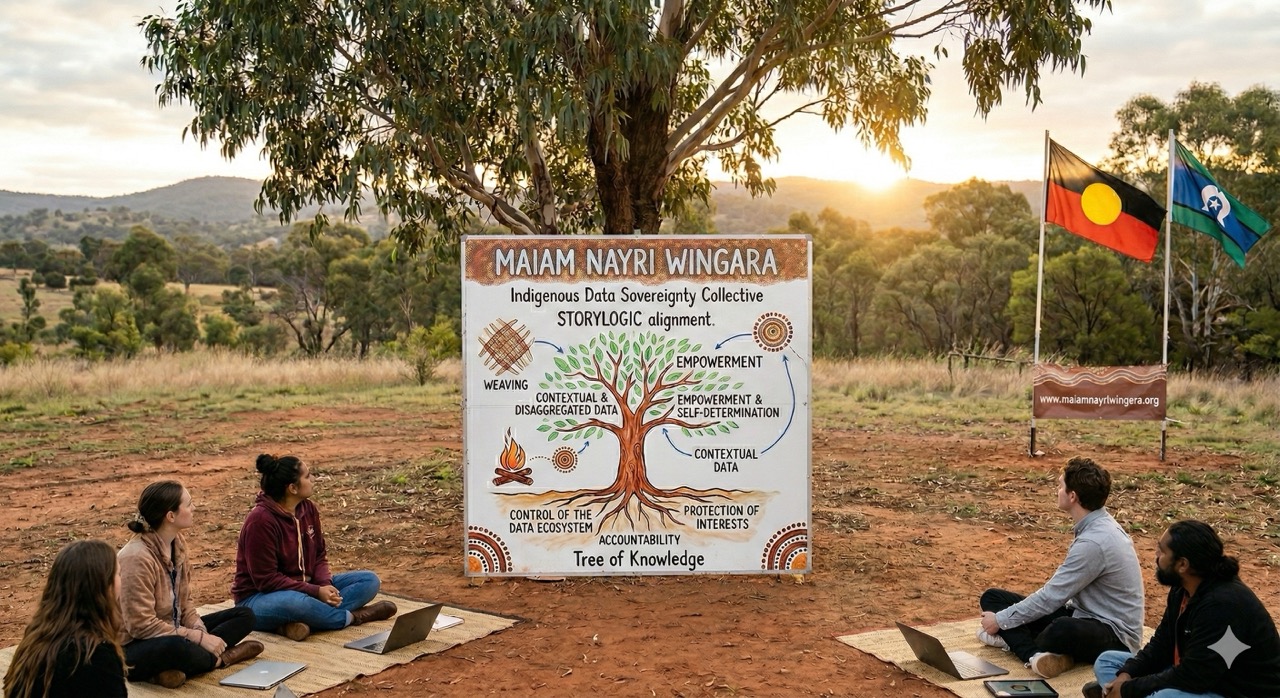
In the boardroom and the research lab, “data” is often viewed as a neutral resource. However, for First Nations people, data is far from neutral. It is a reflection of their stories, their knowledge, and their future.
Enter Maiam nayri Wingara.
Born from a need to reclaim the narrative, this collective is shifting the power balance. The name itself is a beautiful synthesis of Meriam Mer, palawa kani, and D'harawal languages. It translates to a “welcoming of good, deep understanding.” This represents a movement toward Indigenous Data Sovereignty (ID-SOV), which is the right of Indigenous peoples to govern the collection, ownership, and application of data about their lives and lands.
In an era where “data is the new oil,” Maiam nayri Wingara ensures that Indigenous communities are not just the subjects of the extraction; they are the architects of the outcome. For any organisation working with First Nations communities, understanding these principles is not just an “add-on.” It is a fundamental requirement for ethical, accurate, and impactful work.
Putting Principles into Practice: The StoryLogic Approach
It is one thing to understand these principles in theory, but it is another to embed them into the DNA of an organisation. This is where StoryLogic steps in.
StoryLogic is intentionally designed to be guided by the Maiam nayri Wingara principles. We recognize that data is not just numbers on a spreadsheet; it is the lived experience of people.
StoryLogic works closely with Indigenise to incorporate Indigenous Data Sovereignty into everything we build, ensuring our systems honor the cultural protocols and governance structures of the communities we serve.
Here is how we align our work with the MnW framework:
1Control of the Data Ecosystem
We believe that Indigenous communities should own the “infrastructure” of their stories. StoryLogic ensures that data collection and analysis are not extractive processes, but collaborative ones where the community retains stewardship.
2Contextual and Disaggregated Data
Standard data often erases the nuance of different First Nations. StoryLogic prioritizes disaggregated data, ensuring that the specific context, language, and unique heritage of a community are preserved rather than being lost in a broad “Indigenous” category.
3Empowerment and Self-Determination
Data should serve the community, not just the researcher. StoryLogic focuses on “data for governance,” providing communities with the insights they need to make self-determined decisions about their own futures.
4Accountability
We hold ourselves accountable to the people whose data we manage. This means being transparent about how data is used and ensuring that the final “story” told by the data is one that the community recognizes and approves.
5Protection of Collective Interests
Beyond individual privacy, we prioritize the collective interests of First Nations. This includes protecting Traditional Knowledge and ensuring that data is used in ways that are culturally safe and respectful.
Why This Matters for Your Organisation
If your organisation works with First Nations people, the Maiam nayri Wingara principles provide the gold standard for engagement. Implementing these principles through a partner like StoryLogic allows you to:
Build Genuine Trust
Move away from transactional data collection and toward long-term, respectful partnerships.
Achieve Better Outcomes
When data is accurate and contextual, the policies and programs built upon it are far more likely to succeed.
Lead with Ethics
Demonstrate a commitment to decolonizing your data practices and supporting Indigenous self-determination.
A New Way Forward
The work of Maiam nayri Wingara reminds us that data is a tool for empowerment. By adopting these principles, organisations can stop simply “reporting” on First Nations communities and start supporting them.
At StoryLogic, we are proud to walk this path, ensuring that every data point we touch is handled with the “good, deep understanding” that the name Maiam nayri Wingara demands.